
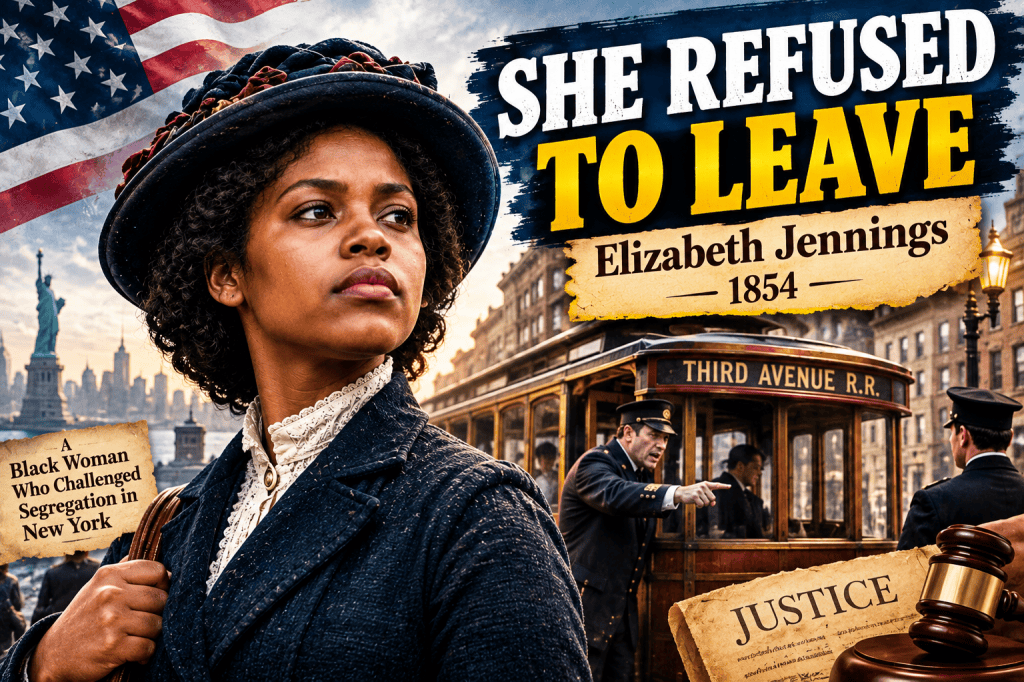
The Forgotten Story of a 24-Year-Old New Yorker Who Challenged Segregation in 1854
In the summer of 1854, a 24-year-old Black schoolteacher named Elizabeth Jennings was traveling through New York City on her way to church.
What happened during that ordinary journey would become an important chapter in the history of the fight against racial discrimination in America.
A Journey to Church
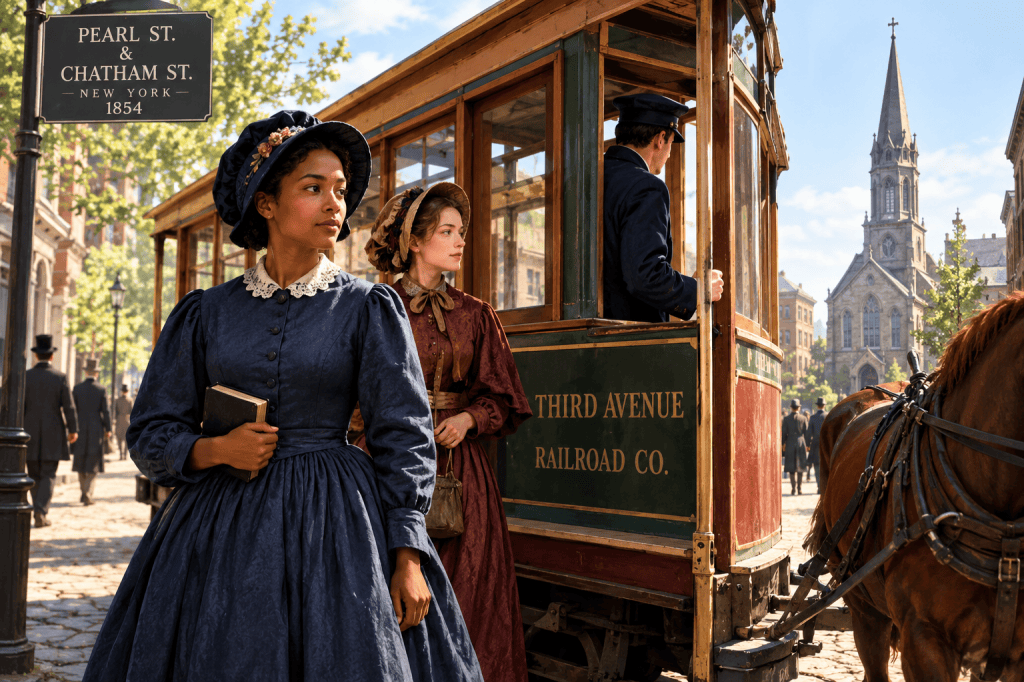
On July 16, 1854, Elizabeth Jennings was traveling to church with her friend Sarah Adams.
They boarded a horse-drawn streetcar near Pearl Street and Chatham Street in New York City.
But Elizabeth was soon ordered to leave the streetcar.
The conductor wanted her removed because she was Black.
Elizabeth refused to leave.
The situation became more serious. She was forcibly removed from the streetcar with the help of police.
But Elizabeth did not simply forget what had happened.
She decided to fight back through the courts.
Elizabeth Jennings Took the Railroad Company to Court
Elizabeth Jennings filed a lawsuit against the Third Avenue Railroad Company.
Her case challenged the treatment she had received simply because of her race.
Her legal team included the firm Culver, Parker and Arthur. One of the young lawyers connected with the firm was Chester A. Arthur, who would later become the 21st president of the United States.
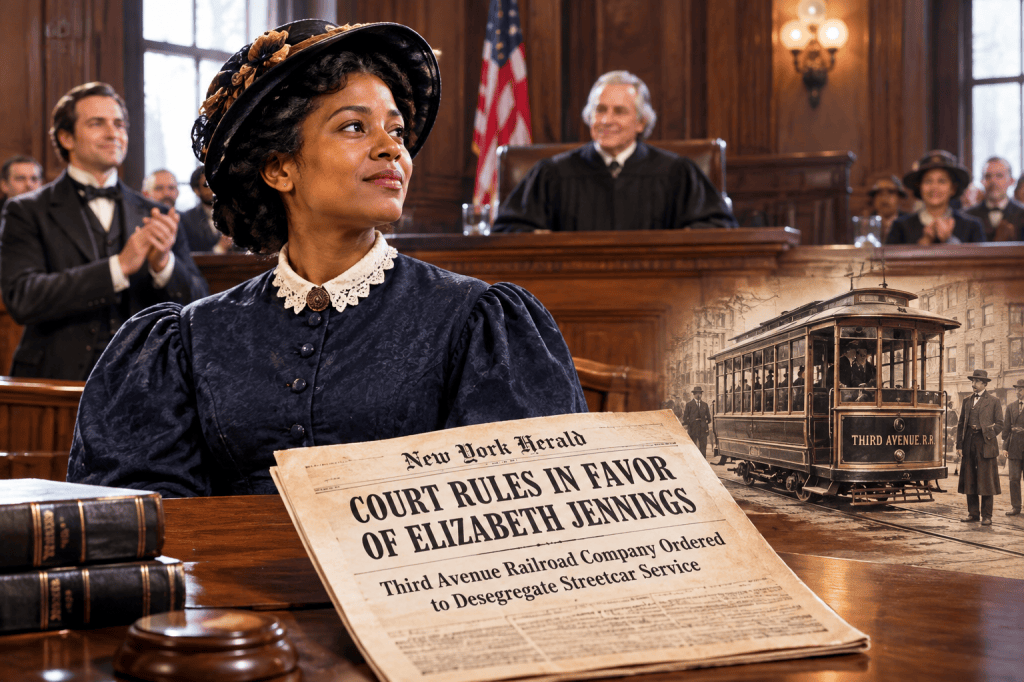
The case was heard in court, and the jury ruled in Elizabeth Jennings’ favor.
According to the Historical Society of the New York Courts, Elizabeth was awarded $225 in damages, plus $22.50 in costs.
For Elizabeth, however, the case was about more than money.
It was about whether a person could be denied access to public transportation because of the color of her skin.
A Legal Victory That Had a Wider Impact
Elizabeth Jennings’ victory became an important moment in the struggle against racial discrimination on New York’s public transportation.
The Third Avenue Railroad Company agreed to desegregate its streetcar service.
Her case was also part of a larger movement challenging racial discrimination in New York.
According to the Historical Society of the New York Courts, New York’s public transportation system had been desegregated by 1861.
Elizabeth’s story therefore became part of a much larger history of African Americans challenging discrimination through legal action and organized resistance.
A Teacher Who Became Part of History
Elizabeth Jennings was not a famous political leader.
She was a teacher.
She was simply trying to travel to church when she encountered discrimination.
Yet instead of accepting what happened, she challenged it.
That decision helped bring her case into a courtroom and created a documented legal victory that is still remembered today.
Nearly a Century Before Rosa Parks
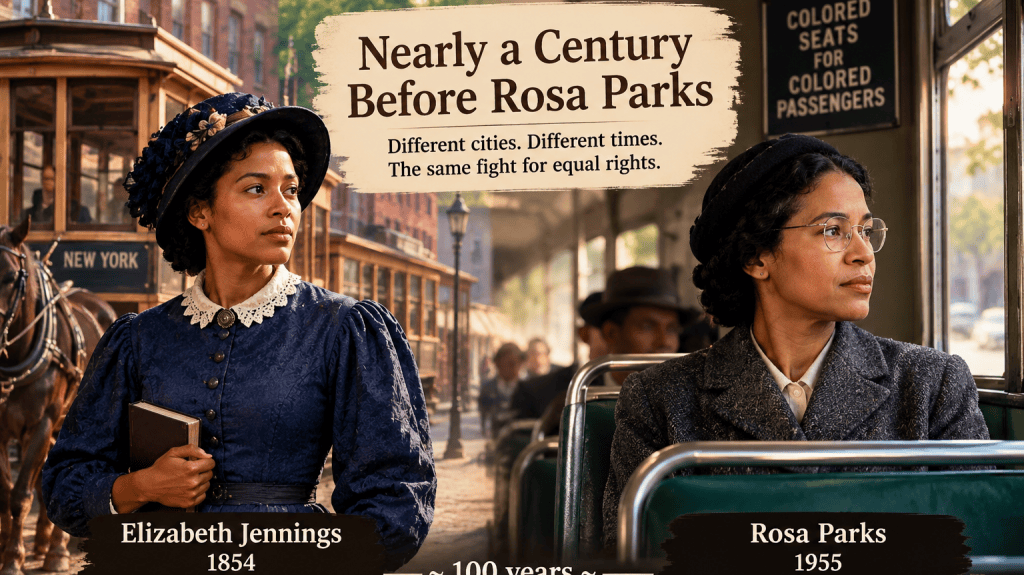
Elizabeth Jennings’ story happened in 1854, about a century before Rosa Parks’ famous 1955 protest on a bus in Montgomery, Alabama.
The two events took place in different cities and different historical circumstances, so they should not be treated as identical.
But both stories are part of the much longer history of African Americans challenging racial discrimination in public transportation.
Elizabeth Jennings’ case shows that this struggle did not begin in the twentieth century.
It had already been taking place in American cities many decades earlier.
Why Elizabeth Jennings’ Story Was Nearly Forgotten
Today, some names from American civil rights history are widely known.
Others are much less familiar.
Elizabeth Jennings belongs to the second group.
Her story began with something that seemed ordinary: a ride to church.
But when she was told to leave the streetcar because of her race, she refused to accept the treatment.
She took the matter to court, won her case, and became part of the history of the fight for equal access to public transportation.
The Woman Who Refused to Move
Elizabeth Jennings did not set out that morning to become a historical figure.
She was simply going where she needed to go.
But when she was told that she did not belong on the streetcar, she refused to quietly accept the decision.
Her courage turned an ordinary journey into a legal battle.
And that legal battle became part of a much larger story about equality in America.
Sometimes, a forgotten piece of history begins with something as ordinary as a ride to church.
And sometimes, one person refusing to move can become the beginning of change.
Sources
Historical Society of the New York Courts — Jennings v. Third Avenue Railroad Co., 1854
New York Transit Museum — Elizabeth Jennings Graham
New-York Historical Society — Fighting Segregation


Leave a comment