
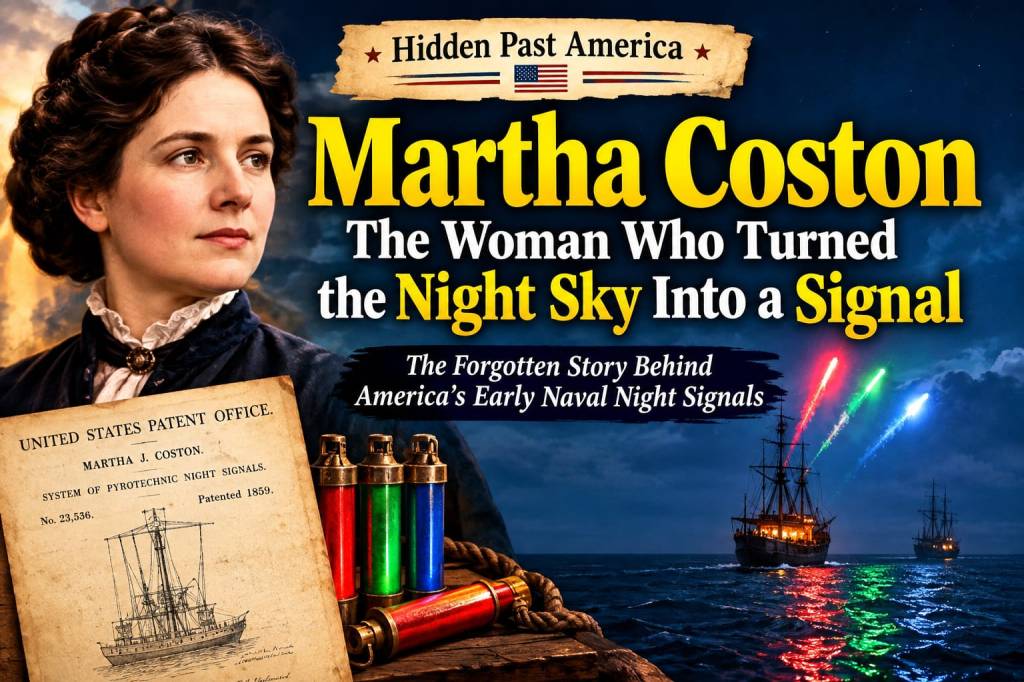
The Forgotten Story Behind America’s Early Naval Night Signals
Imagine standing on a ship in the middle of the ocean during the 19th century.
It is completely dark.
There are no mobile phones, no radio communication, and no satellites.
Another ship may be somewhere beyond the darkness, but communicating with it at night is extremely difficult.
This was a real problem for sailors.
Then an unusual signaling system began changing the way ships communicated after dark.
Behind that story was an American woman named Martha J. Coston.
Her name is not as widely remembered as many famous American inventors, but her work became part of the history of nighttime naval communication.
A Problem on the Dark Ocean
During the 1800s, ships relied heavily on visual signals.
Flags could communicate messages during daylight, but darkness created an entirely different challenge.
A light that could be seen from a distance could potentially solve the problem.
Martha Coston became involved with this idea after the death of her husband, Benjamin Franklin Coston, who had been working on a system for nighttime signaling.
Instead of allowing the unfinished idea to disappear, Martha continued working on it.
In 1859, a patent for a “System of Pyrotechnic Night Signals” was issued to Martha on behalf of her deceased husband. The patent was U.S. Patent No. 23,536.
Turning Light Into Communication
The basic idea was fascinating.
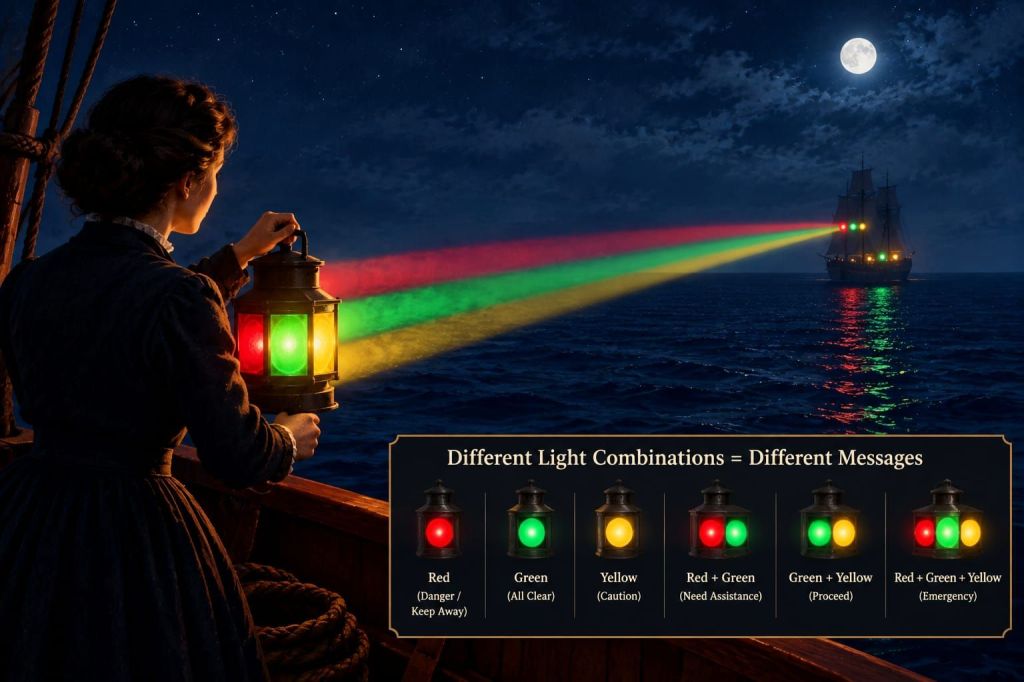
The system used colored lights that could be arranged in combinations.
Different combinations could communicate different information.
That meant the lights were not simply used to make the ocean brighter.
They were being used as a visual communication system.
For a ship surrounded by darkness, a distant colored signal could carry information across the water.
The Smithsonian describes Coston’s three-color pyrotechnic system as an important development in naval communication.
Martha Did More Than Continue the Idea
Martha Coston’s contribution did not end with the first patent.
She continued developing the technology and later obtained an improvement patent in 1871.
She also built a business around the signaling system.
The Smithsonian records that the Coston Supply Company continued operating into the late 1970s.
That is an extraordinary lifespan for a business connected to a technology that began in the 19th century.
The Signals Reached the Navy
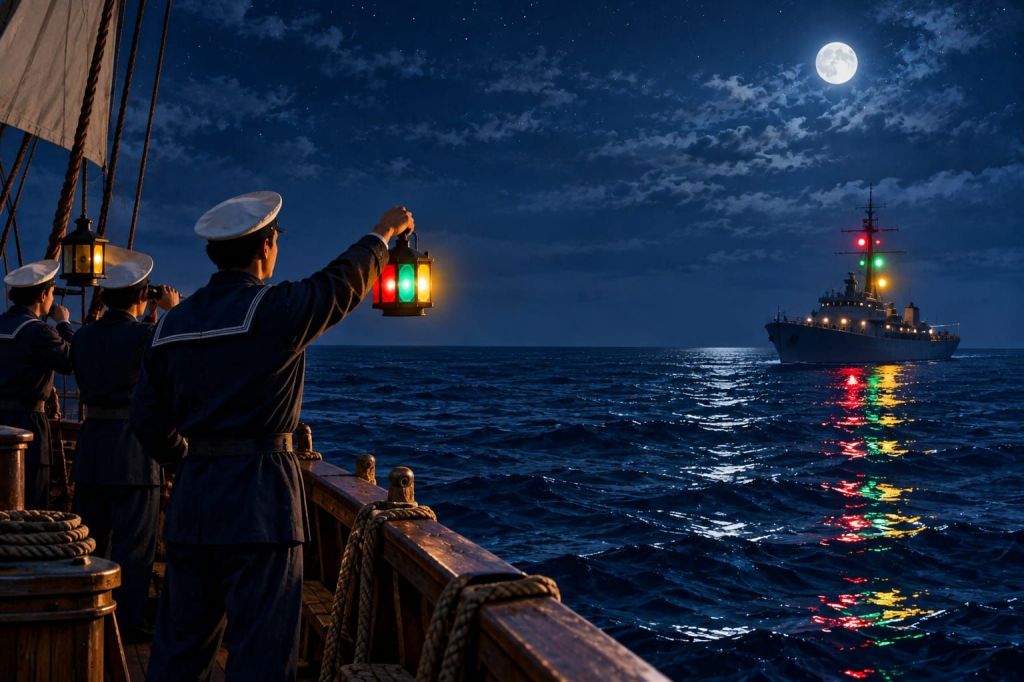
The technology attracted attention because nighttime signaling had obvious practical uses at sea
The Smithsonian reports that the Unitec States Navy and other fleets adopted the Coston signaling system
For sailors livina in an era before modern electronic communication, the ability to send recognizable signals across Jarkness could be extremely valuable
A colored light in the distance could mear much more than a simple flash
t could be a message.
A Complicated Chapter in Patent History
There is another fascinating part of Martha Coston’s story.
The original 1859 patent was issued on behalf of her deceased husband rather than simply recording Martha as the inventor.
This reflects the complicated way women’s contributions were documented in the 19th century.
The Smithsonian notes that Martha’s patent was later omitted from an 1888 government compilation of women inventors, even though she had secured the naval signaling patent.
Her story therefore became connected not only to invention, but also to the history of how women’s achievements were recorded.
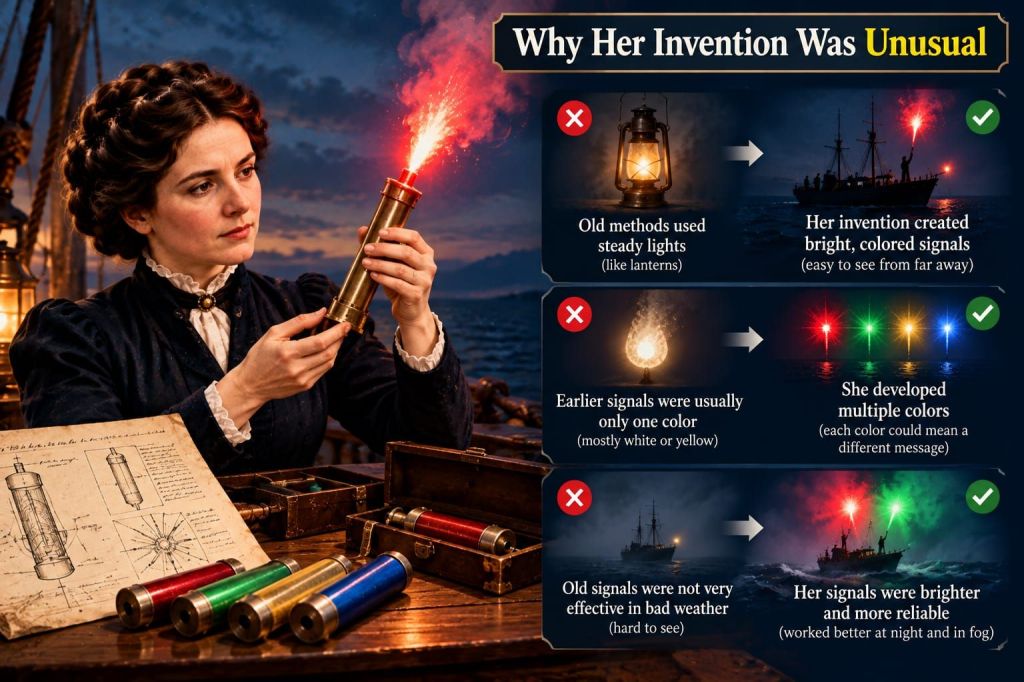
Why Her Invention Was Unusual
Today, sending a message over a long distance is easy.
A person can send a text message in seconds.
But imagine trying to communicate with another ship several miles away in the middle of a dark ocean in the 1850s.
There was no internet.
There were no satellites.
There were no modern radios.
A system based on colored light offered another way to communicate.
The concept was simple:
Use light that people could see, and use patterns of light to carry information.
That simple concept became a practical invention.
From an Idea to a Long-Running Business
Martha Coston’s story is also a story about persistence.
After her husband’s death, she could have allowed the unfinished project to disappear.
Instead, she continued working on it.
She developed the system, secured patents, and created a business around it.
The resulting company survived for generations.
According to the Smithsonian, the Coston Supply Company remained in operation through the late 1970s.
That makes Martha Coston’s story unusual even among historic inventions.
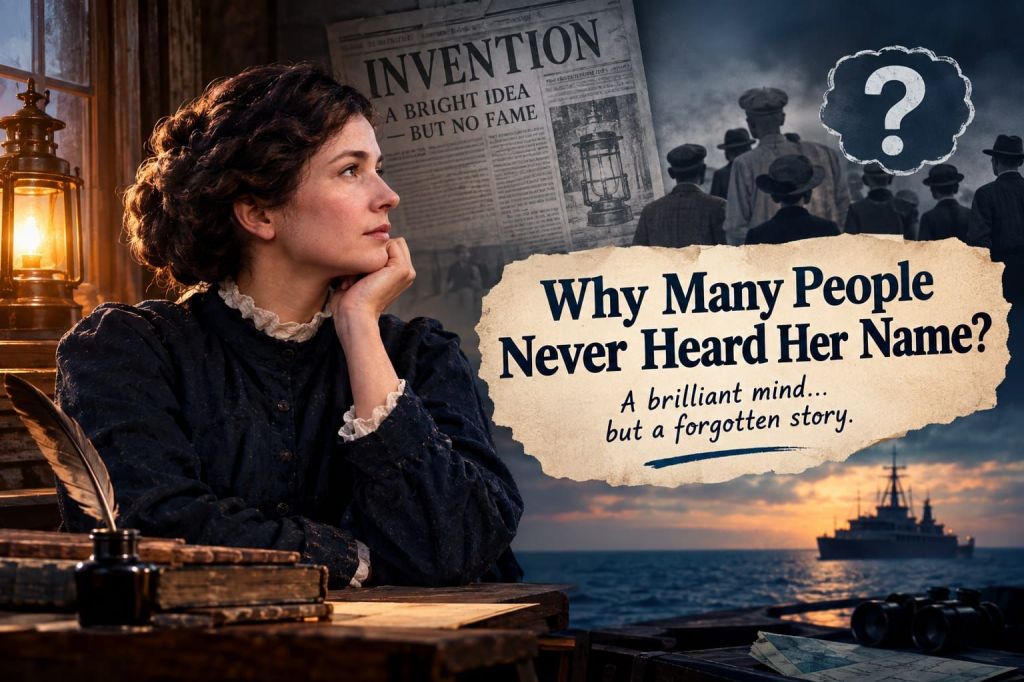
Why Many People Never Heard Her Name
American history contains thousands of inventors.
Some became famous because their inventions changed everyday life.
Others became known only within particular industries.
Martha Coston belongs to the second group.
Her invention was highly specialized.
It was designed to solve a particular problem faced by ships.
Because of that, her name never became as familiar as the names of some other American inventors.
Yet her story shows that an invention does not have to be famous to be historically interesting.
The Woman Who Lit Up the Darkness
Martha Coston’s story began with a problem:
How can ships communicate when the ocean is dark?
Her answer involved colored light.
Those lights became signals.
The signals became a communication system.
And the system became an invention used by naval forces and other fleets.
Today, modern communication technology has completely transformed life at sea.
But more than a century ago, a woman named Martha Coston helped create a different way for ships to communicate across the darkness.
Her name may have faded from popular memory.
Her invention did not disappear so easily.
Sometimes history is hidden not because something was unimportant, but because the people behind it were never given the attention they deserved.
Martha Coston’s story is one of those forgotten chapters of American invention history.
Sources
Smithsonian Institution — Counting Women Inventors


Leave a comment