
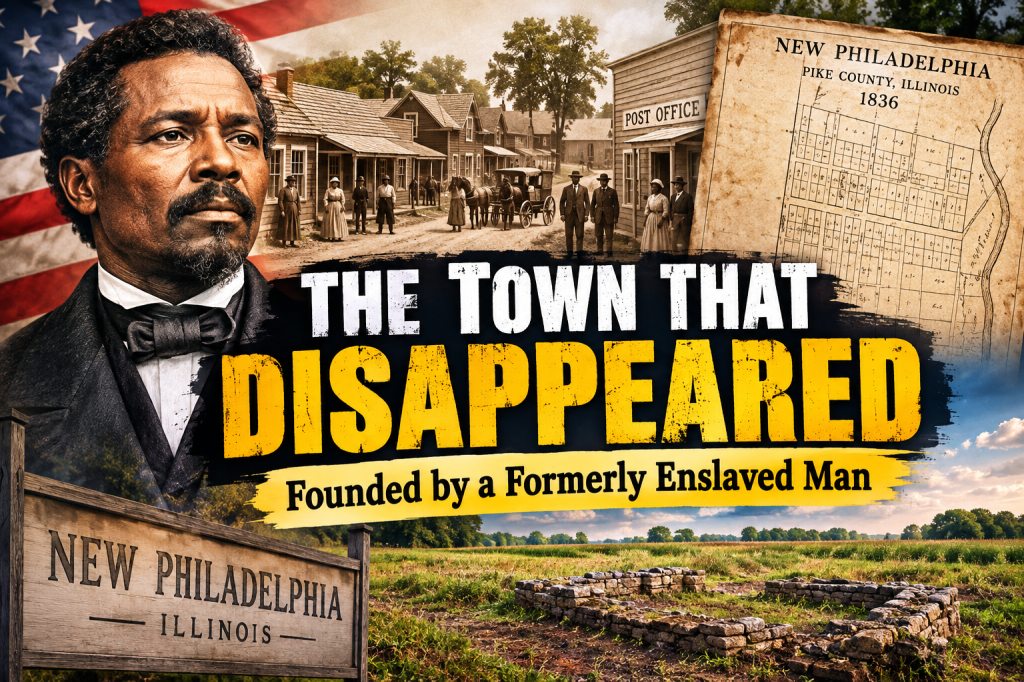
The Remarkable Story of Frank McWorter, the Family He Worked to Free, and the Illinois Town That Eventually Disappeared
There was once a small town in Illinois where Black and white families lived and worked alongside one another.
It had homes, businesses, farms, a post office, and a community of people building lives on the Illinois frontier.
Today, none of its original nineteenth-century buildings remain above ground.
The town was called New Philadelphia.
Its story began with a man named Frank McWorter, a formerly enslaved man who bought his own freedom and then worked to help free members of his family.
In 1836, McWorter founded New Philadelphia in Pike County, Illinois. He purchased land, divided part of it into town lots, and legally registered the community. The National Park Service describes New Philadelphia as the first town in the United States planned and registered by an African American.
A Man Determined to Buy His Freedom
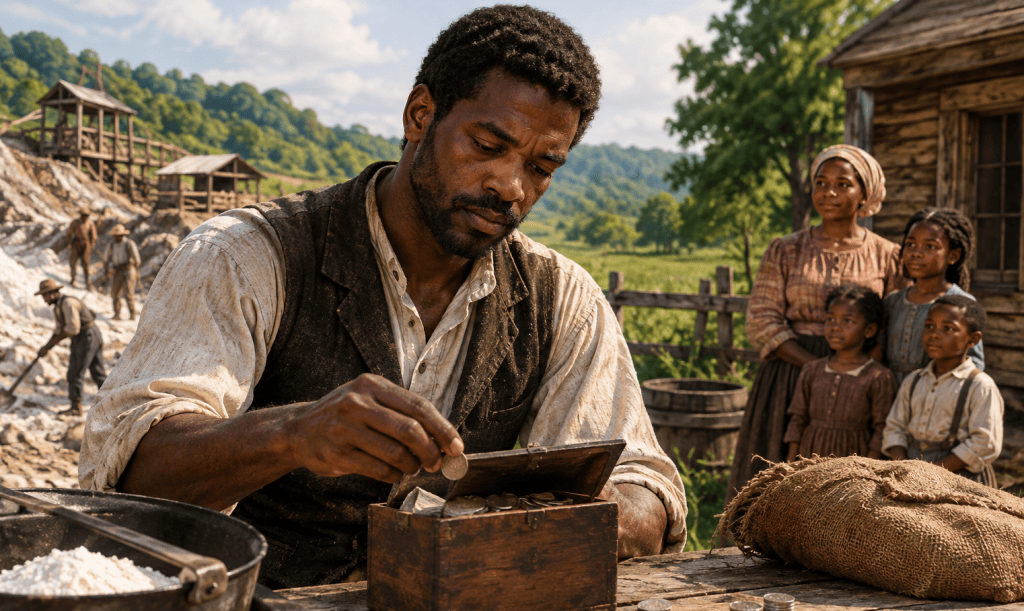
Frank McWorter was born in South Carolina in 1777.
He spent the first 42 years of his life enslaved.
After moving to Kentucky, McWorter found ways to earn money through work that included mining and processing saltpeter, a material used in making gunpowder.
He carefully saved the money he earned.
His goal was not only to change his own life.
He wanted to help his family gain freedom as well.
He first purchased the freedom of his wife, Lucy. In 1819, he purchased his own freedom.
He continued working to purchase freedom for other members of his family.
A New Life in Illinois
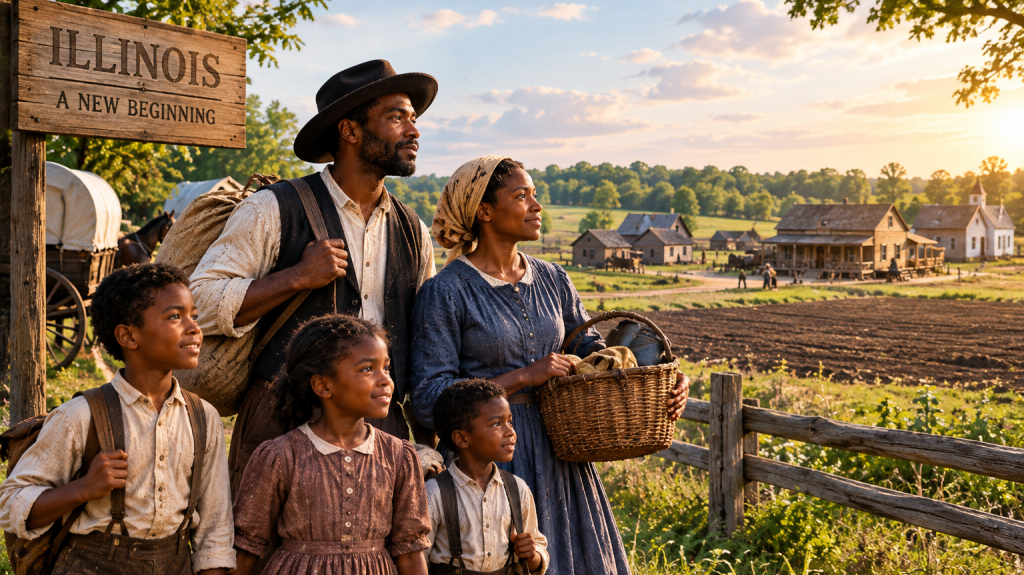
In 1830, Frank, Lucy, and their three freeborn children moved to Illinois.
There, McWorter began building a new life.
But he wanted more than a farm.
He envisioned a community where people could buy land, work, raise families, and build independent lives.
In 1836, he purchased 42 acres in Pike County and divided the land into 144 town lots.
He sold lots to both Black and white settlers.
The money from those sales helped support his continuing efforts to purchase freedom for family members who remained enslaved in Kentucky.
A Small Town With a Big Story
New Philadelphia gradually became a functioning community.
Its residents worked as farmers, merchants, blacksmiths, carpenters, teachers, ministers, physicians, shoemakers, and other tradespeople.
The town also had a post office for a time and served as a stagecoach stop.
Black and white residents lived in the same community during a period when racial tensions and discrimination were widespread in the United States.
New Philadelphia remained a relatively small town, but it became a place where families could build their lives.
In 1850, the community had roughly 58 inhabitants.
By 1865, its population had reached a peak of 160 people living in 29 households, with Black residents making up about 30 percent of the population.
Then the Railroad Passed By
New Philadelphia’s future changed in 1869.
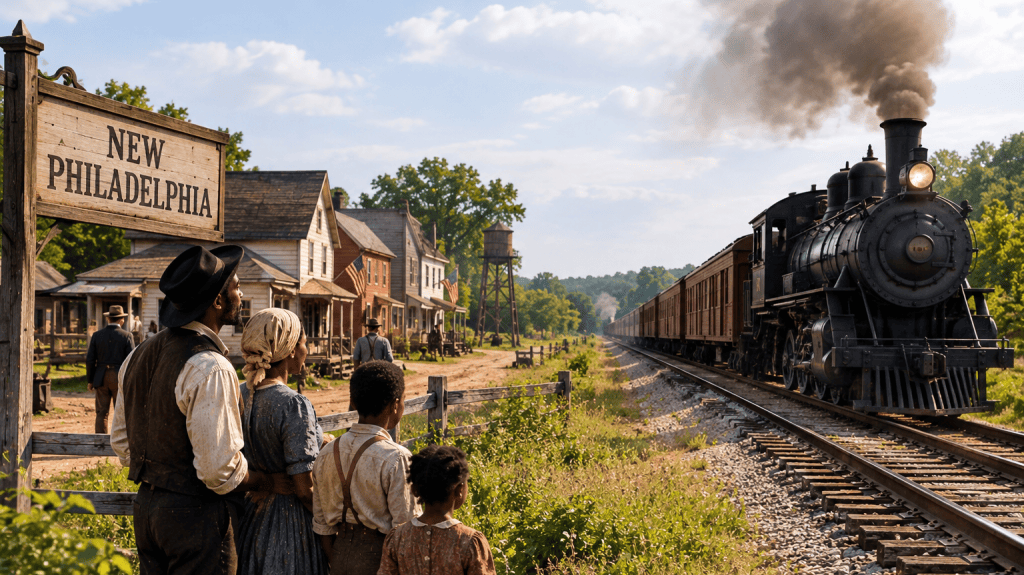
A railroad was built through the region—but it bypassed the town.
That mattered.
Railroads were becoming increasingly important for transportation, trade, and access to markets.
Communities connected to railroad lines could gain new opportunities for business and transportation.
New Philadelphia did not receive that connection.
As the railroad brought trade closer to other communities, New Philadelphia began to decline.
The National Park Service identifies the railroad bypass as an important factor in the town’s decline. Some historical accounts have also suggested that local competition and racial discrimination may have influenced the route, but the exact reasons for the railroad’s route are not completely established.
The Town Slowly Disappeared
The decline did not happen overnight.
Families moved away.
Businesses disappeared.
More of the land was gradually returned to agricultural use.
The community officially dissolved in 1885.
By the 1940s, none of the original town buildings remained above ground. Over time, farming and plowing buried many of the material remains of the old settlement.
Someone passing through the area might never have guessed that a town had once stood there.
But New Philadelphia had not completely disappeared.
Its story survived through historical documents, oral histories, maps, archaeology, and the descendants of people who had lived there.
Archaeology Brings the Story Back
Beginning in the late twentieth century and continuing into the twenty-first century, researchers studied the site more closely.
Archaeologists uncovered evidence that helped reveal how people lived in New Philadelphia.
Foundations, domestic remains, underground features, and artifacts provided clues about the town’s homes, businesses, economy, and daily life.
What appeared to be ordinary farmland was actually an archaeological record of a once-living community.
The ground itself had preserved pieces of the town’s story.
A Community Connected to the Underground Railroad
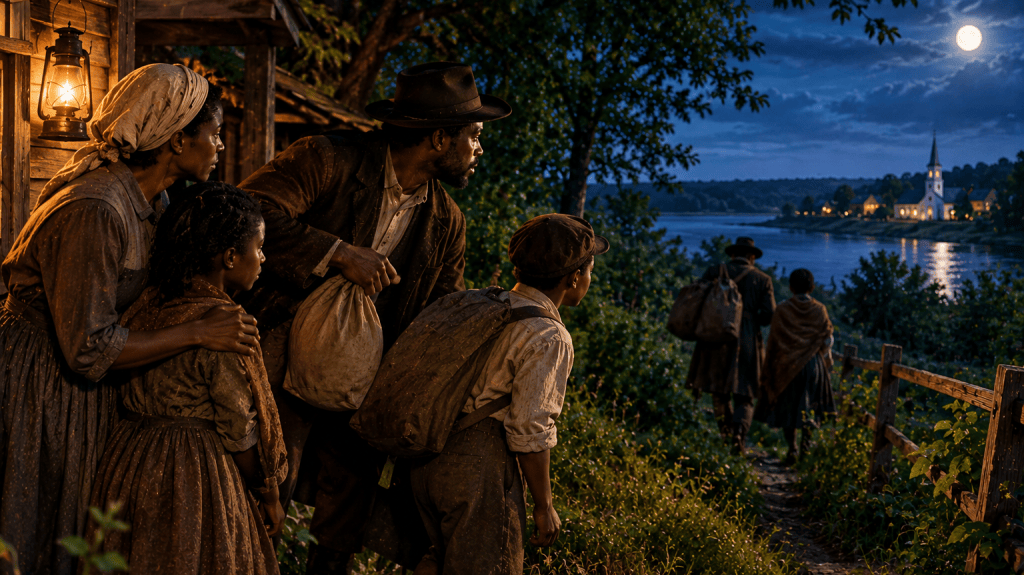
New Philadelphia’s history was also connected to the movement of freedom seekers.
According to National Park Service historical materials and descendant ora histories, members of the McWorter family and other residents helped freedom seekers traveling north
The town’s location in western Illinois relatively close to Missouri, placed it near routes used by people escaping slavery
Today, New Philadelphia is included in the National Park Service’s Nationa Underground Railroad Network to Freedom.
Why New Philadelphia Matters
New Philadelphia is important because its history shows how individual people helped shape America’s past.
Frank McWorter had been enslaved.
He purchased his freedom.
He worked to purchase freedom for members of his family.
Then he founded a town.
His story connects freedom, family, land, business, migration, and community building in one remarkable place.
The physical town eventually disappeared.
Its history did not.
Today, New Philadelphia is listed on the National Register of Historic Places, designated a National Historic Landmark, and included in the National Park Service’s National Underground Railroad Network to Freedom.
A Town Beneath the Fields
Today, no original nineteenth-century buildings remain standing at New Philadelphia.
The streets that once carried wagons are gone.
The homes are gone.
The businesses are gone.
But the land still preserves evidence of the people who lived there.
New Philadelphia reminds us that a place does not need to remain filled with buildings to remain historically important.
Sometimes, the places that appear quiet or empty can contain remarkable stories.
Under the fields of Illinois lies the story of a man who bought his freedom, worked to free members of his family, and created a community of his own.
New Philadelphia disappeared from the landscape.
But it never completely disappeared from American history.


Leave a comment