
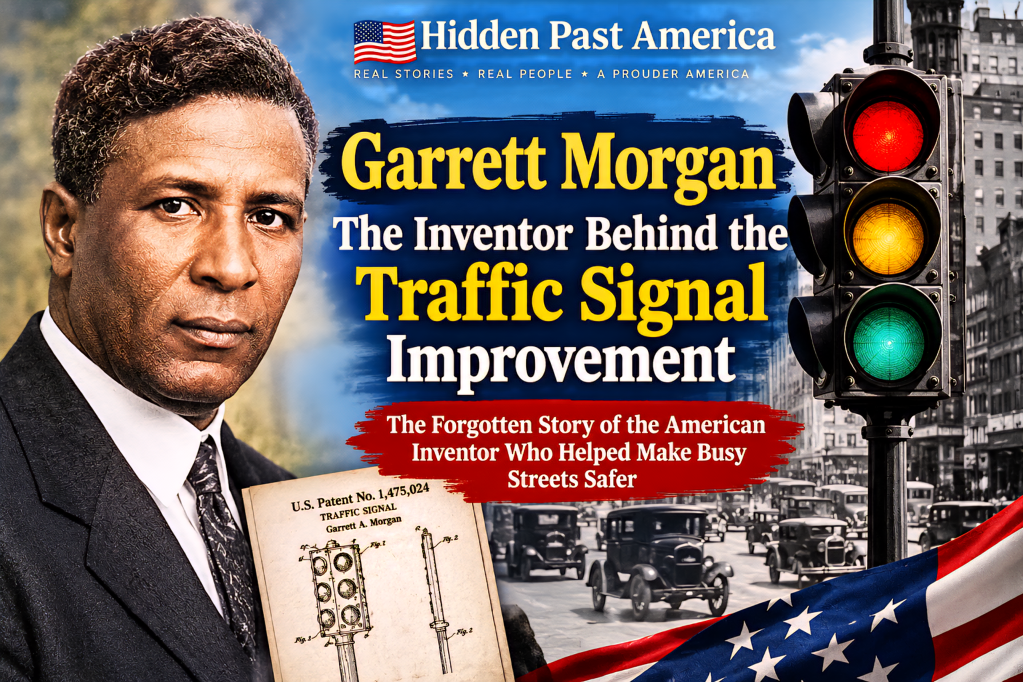
The Forgotten Story of a Black American Inventor Whose Ideas Changed Everyday Life
In American history, some of the most useful inventions came from people whose names are not always remembered.
Garrett Morgan was one of them.
Born in Kentucky in 1877, Morgan became an inventor and entrepreneur at a time when opportunities for Black Americans were severely limited. Despite those barriers, he developed inventions that addressed practical problems in everyday life.
His work eventually touched transportation, public safety, and even the way firefighters approached dangerous environments.
But Morgan’s story is about more than inventions. It is about creativity, persistence, and the determination to solve problems when few people expected him to succeed.
From Kentucky to Cleveland
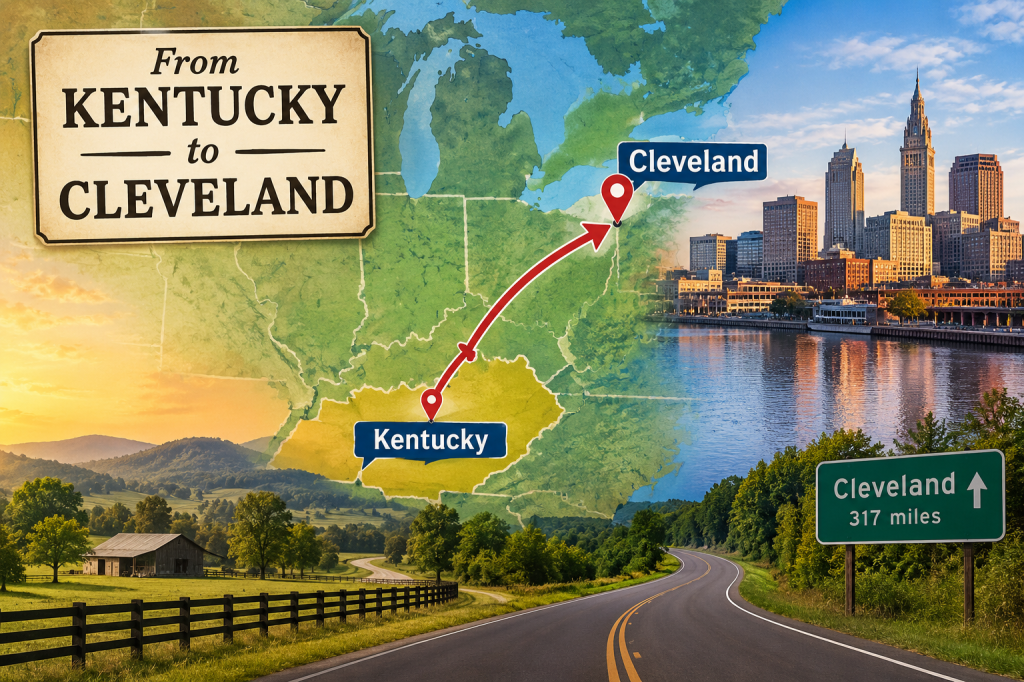
Garrett Augustus Morgan was born on March 4, 1877, in Claysville, Kentucky.
As a young man, he moved north to Cleveland, Ohio, looking for better opportunities.
Like many people who migrated from the rural South to northern cities, Morgan hoped to build a better future through hard work.
He began working with sewing machines and eventually opened his own repair business.
His experience with machines gave him something important: a practical understanding of how mechanical devices worked.
Morgan did not simply see machines as complicated pieces of metal.
He saw problems that could be solved.
An Inventor Who Looked for Everyday Problems
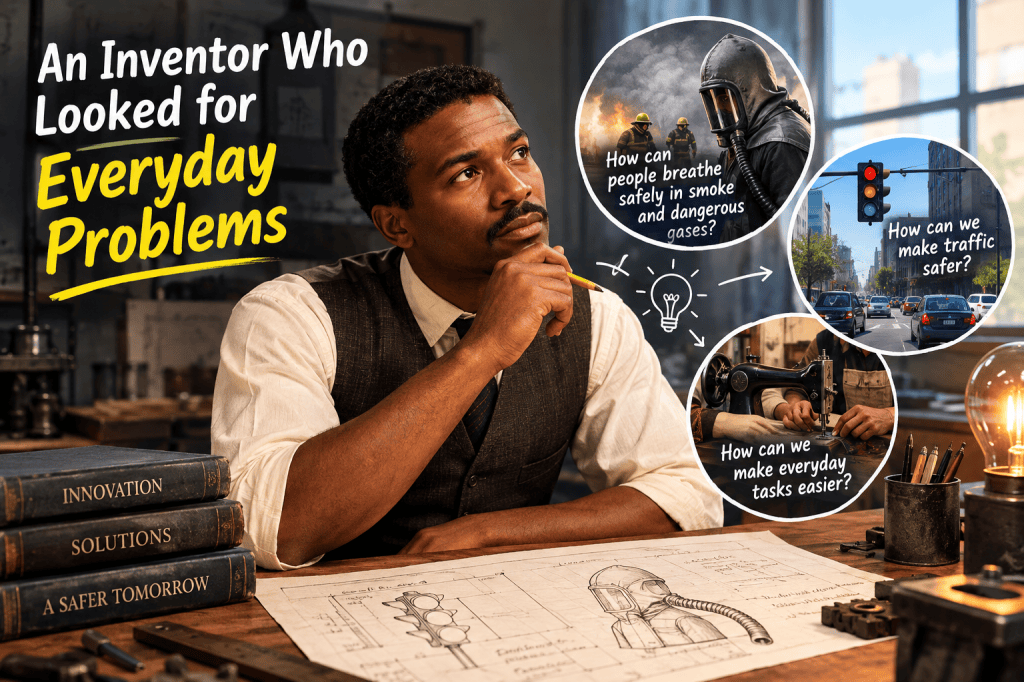
Morgan became interested in finding better ways to do ordinary tasks.
One of his early successful inventions was an improved sewing-machine device.
He later became involved in hair-care products and created a successful business around his inventions.
This business success gave Morgan the financial resources to continue experimenting.
But one of his most important inventions came from a completely different problem.
It involved breathing.
The Safety Hood That Could Protect Workers
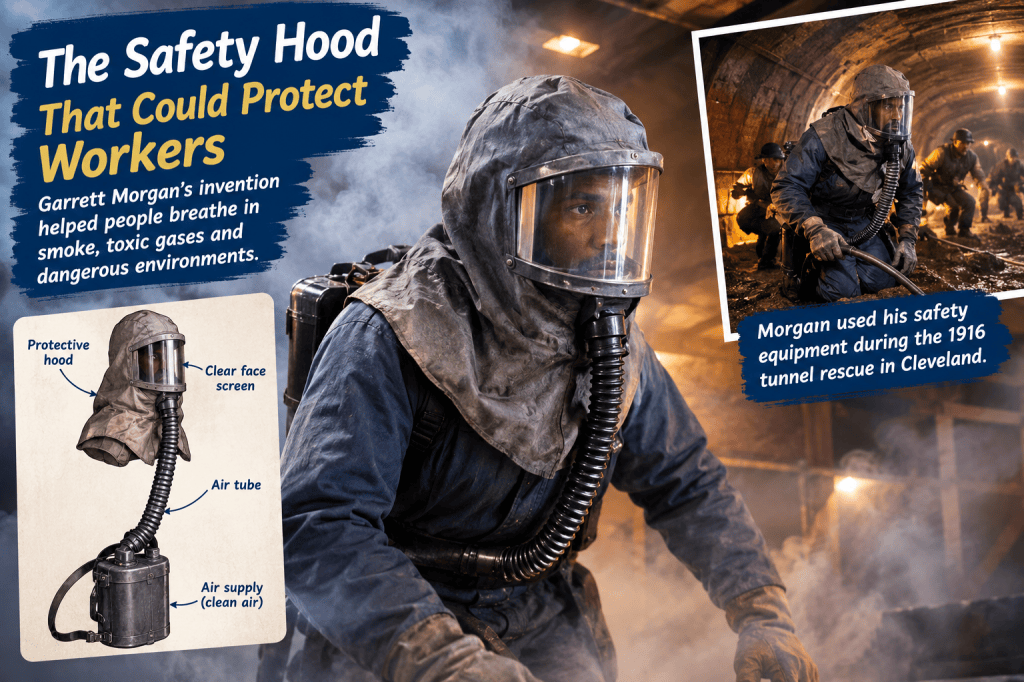
In the early 1900s, firefighters and other workers sometimes entered places filled with smoke, poisonous gases, and dangerous fumes.
Morgan developed a safety hood designed to help a person breathe in such environments.
The device used a long tube that extended downward toward cleaner air.
Morgan demonstrated the invention publicly, including during a dangerous rescue in Cleveland in 1916.
A tunnel beneath Lake Erie had suffered an explosion, trapping workers underground.
Morgan and his brother Frank went into the tunnel with Morgan’s safety equipment and helped rescue survivors.
The rescue brought attention to Morgan’s invention.
But there was another problem.
America in the early twentieth century was deeply affected by racial discrimination.
Morgan sometimes found that people were less willing to recognize his achievements because he was Black.
Even so, he continued working.
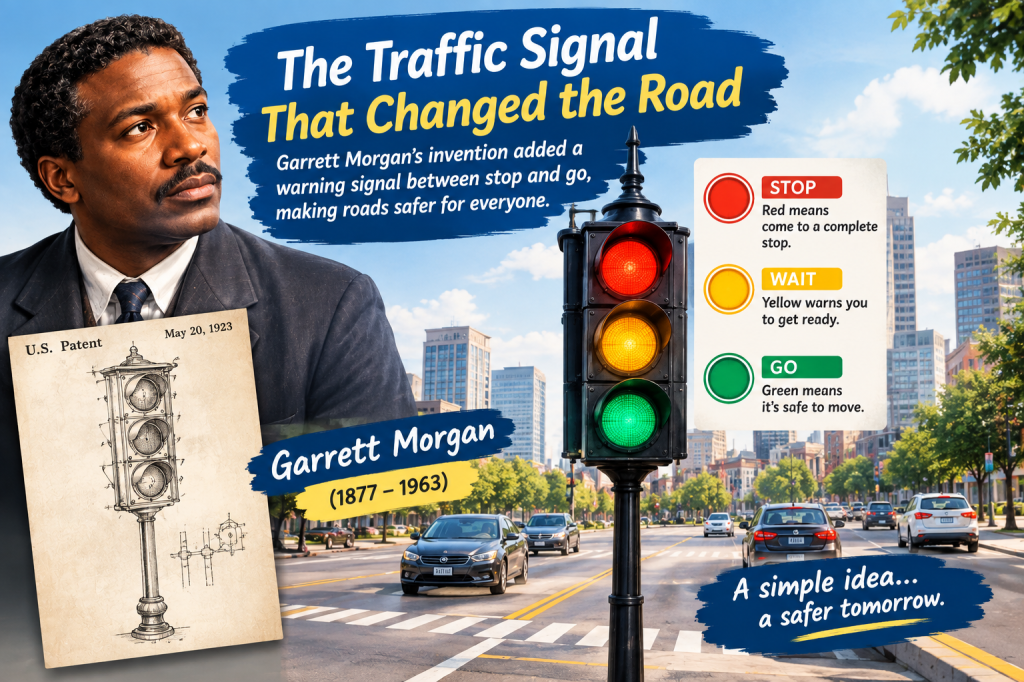
The Traffic Signal That Changed the Road
Morgan’s most famous invention came after he witnessed a serious traffic accident.
At the time, early traffic signals generally used two positions: stop and go.
Morgan believed drivers needed a warning period between those two commands.
He developed a traffic-control device with a third position that warned drivers to stop before traffic from another direction moved.
In 1923, Morgan received a U.S. patent for his traffic signal.
The basic idea was simple:
Stop.
Wait.
Go.
That warning interval became an important part of modern traffic control.
Morgan later sold the rights to his traffic signal to General Electric.
More Than an Inventor
Morgan’s work was not limited to machines.
He also became a businessman and community leader.
He founded the Cleveland Call newspaper, which later became known as the Cleveland Call and Post.
He also became involved in organizations supporting Black Americans and their communities.
Morgan understood that invention alone could not remove every barrier.
Education, economic opportunity, and community organization mattered too.
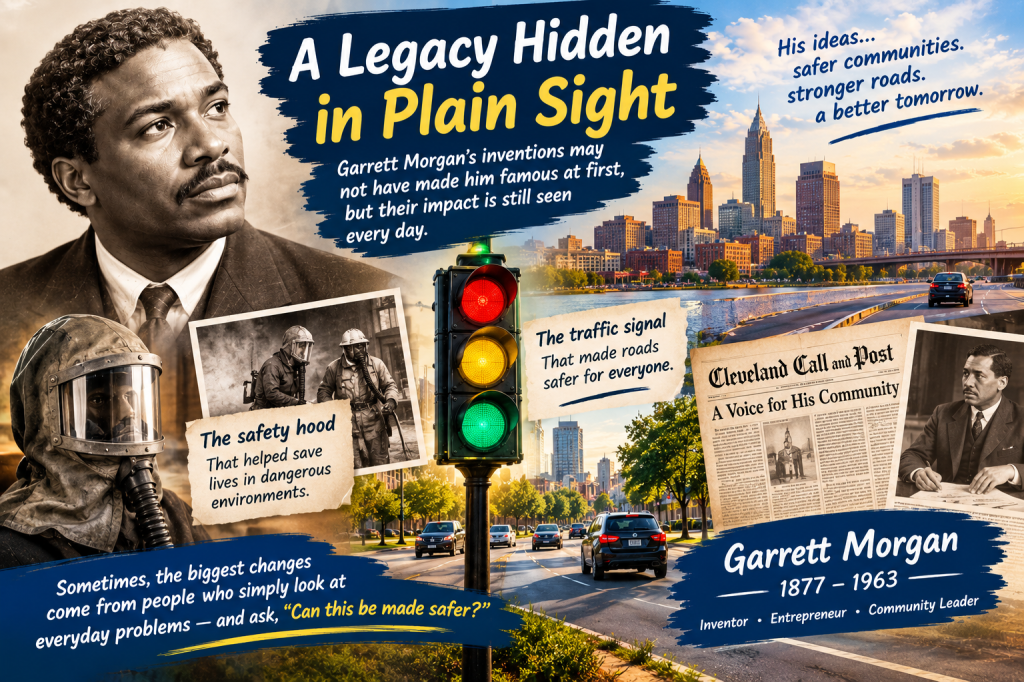
A Legacy Hidden in Plain Sight
Today, millions of people use roads controlled by traffic signals.
Firefighters and emergency workers continue to rely on sophisticated breathing and protective equipment.
The technology used today is far more advanced than Morgan’s original designs, but his work represents an important part of the history of public safety and innovation in America.
Garrett Morgan died in Cleveland in 1963.
He lived through enormous changes in American history—from the era of segregation to the beginning of the modern civil-rights era.
His life shows how one person could take ordinary problems and turn them into opportunities for invention.
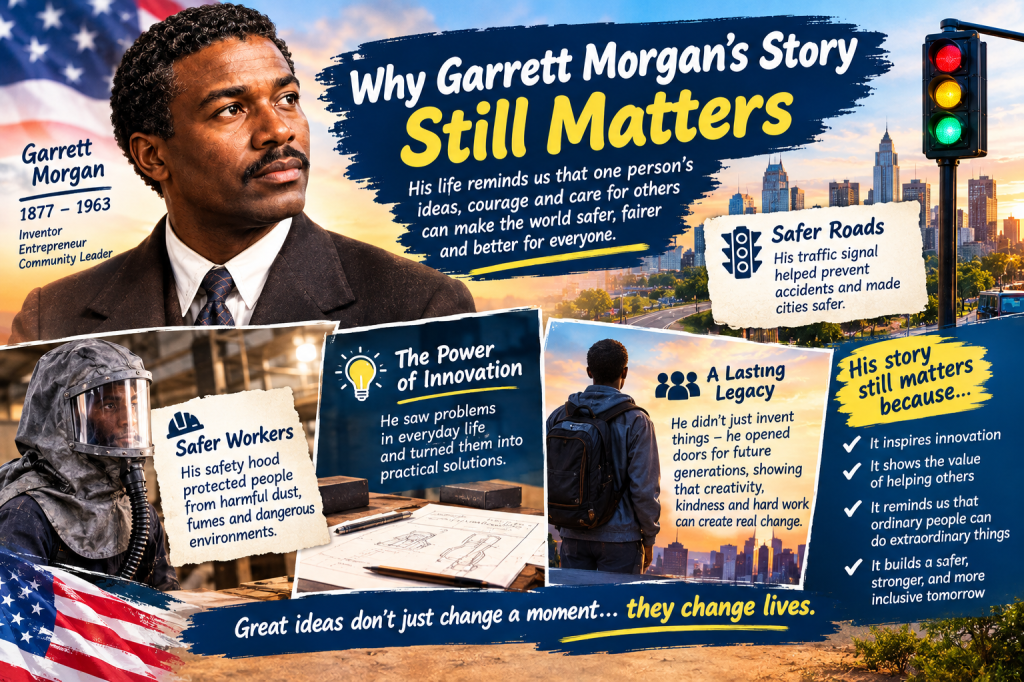
Why Garrett Morgan’s Story Still Matters
Garrett Morgan did not become famous simply because he invented things.
His story matters because he kept creating despite the barriers around him.
He looked at dangerous situations and asked a simple question:
Can this be made safer?
That question led him to develop devices that addressed real problems faced by workers and drivers.
His story is a reminder that American history is not made only by presidents, generals, and famous leaders.
It is also made by inventors, workers, entrepreneurs, and ordinary people who create something that makes everyday life a little safer.
Garrett Morgan was one of those people.
And his name deserves to be remembered.
Sources for Historical Research
• U.S. Patent and Trademark Office records
• National Inventors Hall of Fame
• Library of Congress
• Cleveland Public Library


Leave a comment